
Galway Commercial Property Market Guide: Rents, Yields and Demand
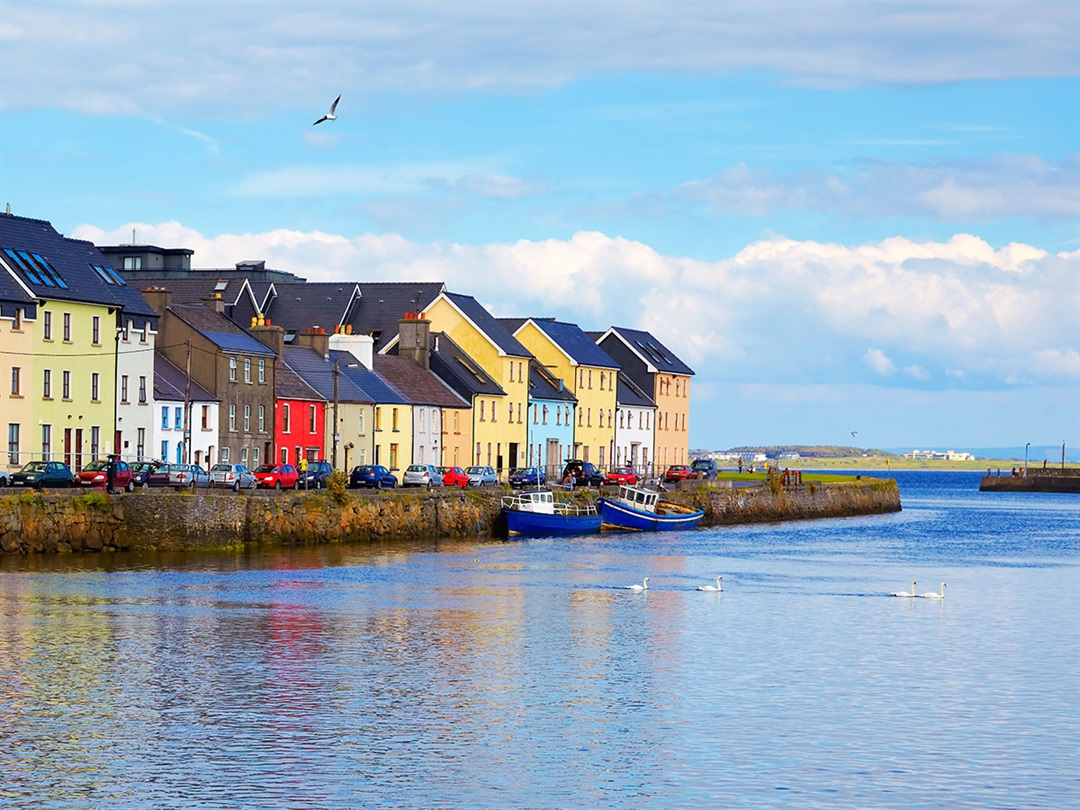
Galway is one of Ireland's most active regional commercial property markets. Employers in medical technology, pharmaceuticals, technology and professional services are based here, and businesses continue to look for good office, industrial and retail space in the city and county.
This guide looks at what is shaping the market: rents, investment yields and tenant demand. The short version is that demand for good commercial property holds up across offices, industrial and retail. Modern, energy-efficient buildings in established business parks attract the most interest. Prime assets trade at lower yields than secondary stock, which offers higher returns with more risk.
Galway's Commercial Property Market
Galway's economy is broad. It has multinational employers, a strong SME sector, third-level institutions and a growing population. Demand comes from a wide range of occupiers:
- Medical technology
- Manufacturing
- Technology
- Professional services
- Retail
- Hospitality
- Logistics
That spread supports demand over the long term. Recent market commentary suggests the commercial sector here remains resilient, with confidence improving across many property types.
Commercial Rental Trends
Rents vary a lot with property type, specification and location. Modern offices in prime city locations generally let for more than older secondary stock. Industrial and logistics units in established business parks are in strong demand. Retail rents in the prime city centre are well ahead of suburban and secondary locations.
Energy-efficient buildings continue to outperform older stock, as occupiers pay more attention to sustainability, running costs and staff wellbeing. New Grade A offices in Galway city have achieved rents of around €40 per sq. ft., while good-quality secondary offices are generally quoting in the high €20s to low €30s per sq. ft.
Office Market
The office market has changed considerably in recent years. Occupiers now put more weight on:
- High BER ratings
- Flexible layouts
- Modern building services
- Sustainable workplaces
- Accessible locations with plenty of parking
Hybrid working has changed requirements, but demand for good office space is still healthy, particularly for newer buildings that meet current environmental standards.
Industrial and Logistics
Industrial continues to perform strongly. Parkmore, Ballybrit and Mervue remain sought after for their transport links and the number of established employers already there. Demand comes from manufacturing, medical devices, distribution, engineering and technology.
The limited supply of modern industrial units has supported both rents and investment values. Nationally, surveyors expect industrial rents to keep growing during 2026.
Retail Market
Retail depends heavily on location and the type of occupier. Prime city-centre units still attract established retailers, cafés and restaurants. Retail parks and neighbourhood centres suit convenience retailers and service businesses.
Occupiers increasingly want strong footfall, easy parking, visibility and flexible layouts. Some secondary retail locations are still struggling, but well-positioned units remain attractive to occupiers and investors.
Investment Yields
Yield is one of the main measures of commercial property performance. Put simply, it is the annual rent a property produces as a percentage of its value.
Prime investments usually trade at lower yields because investors see less risk and competition for them is stronger. Secondary properties tend to offer higher yields, reflecting shorter leases, older buildings or greater letting risk.
Yields depend on location, lease length, tenant covenant, building condition, demand and asset type. Comparing yields is how buyers weigh one opportunity against another.
What's Driving Demand?
- Continued population growth
- Expansion of multinational employers
- A strong indigenous business sector
- Ongoing infrastructure investment
- Demand for energy-efficient buildings
- Limited supply of modern commercial accommodation
These have kept demand steady in much of the market despite wider economic pressures. National survey data points to cautious optimism, with expectations for rents and capital values improving across offices, industrial and retail in 2026.
Why Local Market Knowledge Matters
National trends only tell part of the story. Local demand, competing schemes, infrastructure works and what tenants actually need all feed into rents and investment performance. Advice from someone who knows the Galway market leads to better decisions on purchases, sales, rent reviews and lease negotiations.
Frequently Asked Questions
What types of commercial property are most in demand in Galway?
Modern office accommodation, industrial units and well-located retail premises continue to attract strong demand, particularly where properties offer good accessibility, energy efficiency and modern facilities.
What is an investment yield?
An investment yield measures the annual rental income generated by a property as a percentage of its purchase price or market value. It is commonly used by investors to compare commercial property opportunities.
Is Galway a good location for commercial property investment?
Galway's diverse economy, strong business community and continued demand for quality commercial space make it one of Ireland's most attractive regional commercial property markets. As with any investment, success depends on the specific property, tenant quality and prevailing market conditions.
Commercial Property Advice in Galway
HPS Real Estate advises landlords, investors, occupiers and developers across Galway and the west of Ireland on commercial sales, lettings, valuations, rent reviews and asset management.
To discuss a commercial property, a rent review or an investment, contact HPS Real Estate.