
ESG and BER B Requirements for Irish Commercial Property
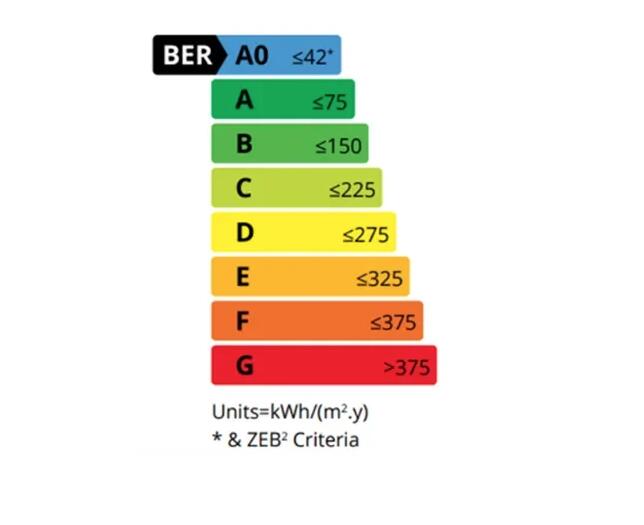
Irish commercial property is now being priced on its energy performance. CSRD, the recast EPBD, MEES-style minimum standards and the ESG requirements of Irish lenders have opened a measurable yield gap between BER-compliant and non-compliant buildings, often 75 to 125 basis points on otherwise equivalent stock. Stranded assets are no longer a theoretical risk. Below I set out the regulations, the retrofit numbers and how we approach it on the assets we manage.
The regulatory landscape in 2026
EU CSRD
The Corporate Sustainability Reporting Directive requires large EU companies and listed entities to report detailed ESG metrics across financial, social and environmental areas. Reporting started in 2024 and widens each year. Property is directly affected, because tenant occupancy data, building emissions and spend on energy retrofits all feed into the disclosures of tenants who report under CSRD.
EPBD recast
The 2024 recast of the Energy Performance of Buildings Directive tightens minimum energy performance standards across the EU. It is being transposed into Irish law between 2026 and 2030. Non-residential buildings will face rising minimum standards, starting with the worst-performing 16 percent of stock.
Irish lender underwriting
The main Irish lenders increasingly want ESG data before they will lend. BER ratings, energy use intensity and green-lease clauses now sit alongside covenant strength as standard underwriting inputs. A non-compliant building will either pay a higher margin or not get financed at all.
What BER B means in practice
BER (Building Energy Rating) is Ireland's version of the EU EPC, running from A1 to G. For commercial property in 2026:
- A1 to A3: the best performers. New-build standard, with passive design and renewables.
- B1 to B3: the institutional minimum for prime stock. Most well-located buildings from the 1990s on can get there with a targeted retrofit.
- C1 to C3: acceptable for secondary stock, but harder to finance and harder to let to institutional tenants.
- D and below: at real risk of becoming stranded, where the retrofit costs too much relative to what the building is worth.
Retrofit economics
Taking a 1990s Irish office from BER D to BER B in 2026 typically costs 100 to 300 euro per sq ft, depending on the existing M&E, the fabric and how much disruption tenants can tolerate. The return comes in two ways:
- A tighter exit yield (75 to 125 bps), which works out at 15 to 25 percent more capital value than an unimproved comparable.
- Headline rents 10 to 20 percent higher at the next letting.
On most well-located assets the retrofit adds value. Where the cost runs to a high share of current value, knocking down and rebuilding may make more sense.
Tenant demand
Large occupiers, particularly law firms, financial and professional services and global tech, have published net-zero commitments and will not sign new leases in buildings that fall short on BER. That is the demand side of the yield gap. A non-compliant building simply has fewer tenants who will take it.
What we do as asset managers
On every asset HPS Real Estate manages, we now run:
- A BER and energy audit at acquisition and every five years after that.
- A retrofit programme timed around lease expiries, so works can be done between tenancies where possible.
- GRESB-aligned data collection where the asset sits in a portfolio that reports to investors.
- A green-lease addendum at each rent review and renewal, covering data sharing, energy efficiency and waste and water performance.
The stranded-asset question
By 2030 the bottom quartile of Irish commercial stock (BER E, F and G) is expected to be effectively unfinanceable, and unlettable to institutional tenants. Owners of that stock have four options:
- Retrofit, where the numbers work.
- Sell, while there is still a market.
- Repurpose, for example office to residential or retail to mixed use.
- Demolish and rebuild, where the land value supports it.
Doing nothing is not one of them.
Frequently asked questions
When does the BER B requirement actually bite for Irish commercial property?
Progressively from 2026 onward through the EPBD recast transposition, and immediately in practice through lender underwriting and tenant demand. Institutional tenants in 2026 already insist on BER B or better for new leases on prime stock.
Is retrofitting Irish commercial property economic?
For most well-located 1990s-plus buildings, yes. The combination of yield compression (75 to 125 bps), headline rent uplift (10 to 20 percent) and continued financeability outweighs the retrofit cost. For deeply non-compliant buildings near the cost-to-value tipping point, demolition or repurposing is the better answer.
Does ESG affect Irish property valuations?
Materially. Equivalent BER A/B versus BER D buildings can show 75 to 125 basis-point yield gaps. Professional valuations in 2026 increasingly treat ESG profile and retrofit liability as material assumptions.
What is GRESB and does it matter for Irish real estate?
GRESB (Global Real Estate Sustainability Benchmark) is the voluntary ESG benchmark used by global institutional fund managers. Irish funds and REITs increasingly participate; for portfolios reporting to international LPs, participation is effectively a requirement.
What is a stranded asset in Irish commercial property terms?
A building whose ESG profile makes it uneconomic to retrofit relative to its value, leaving it effectively unfinanceable and unlettable to institutional tenants. The bottom quartile of current Irish stock (E to G BER ratings) is at material stranded-asset risk by 2030.
HPS Real Estate provides asset management, valuations and development advice across Ireland and the UK. Contact info@hpsproperty.ie.